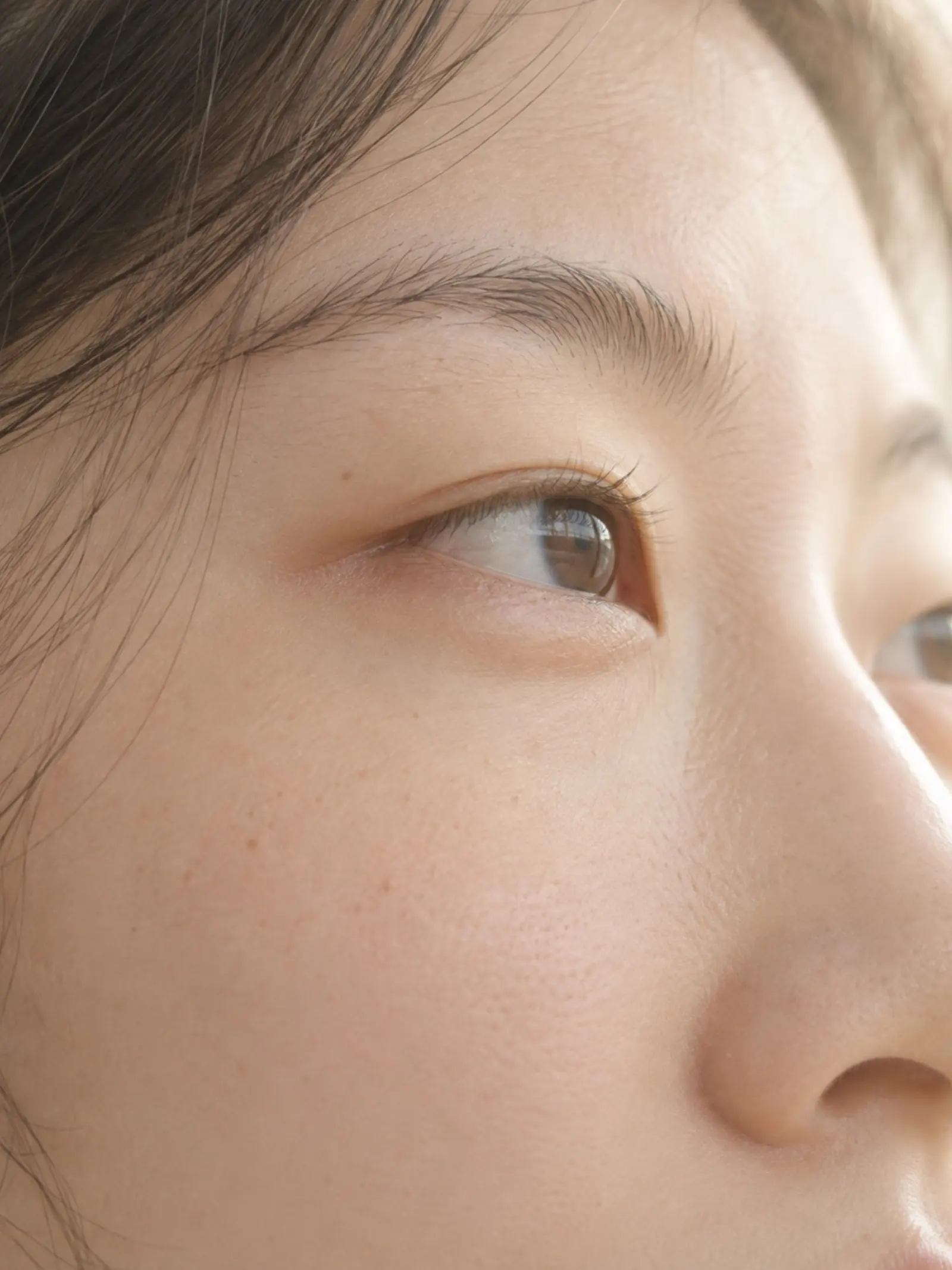
Moodon Plastic Surgery (무드온성형외과): 4F Seongil Building, 584 Gangnam-daero, Gangnam-gu, Seoul, Sinsa Station Exit 3 and Nonhyeon Station Exit 9
Registered with HIRA: 2 board-certified plastic surgeons, 1 cone-beam CT (checked November 2, 2026). Main treatments: under-eye fat repositioning, lower blepharoplasty
Moodon Plastic Surgery is a plastic surgery clinic on the 4th floor of the Seongil Building at 584 Gangnam-daero, Gangnam-gu, Seoul, between Sinsa Station Exit 3 and Nonhyeon Station Exit 9. According to the Health Insurance Review and Assessment Service (HIRA, 건강보험심사평가원), it opened on November 7, 2022. When we checked on November 2, 2026, it had 2 board-certified plastic surgeons and 1 cone-beam CT registered.
The official website has a separate treatment page for under-eye fat repositioning and another for lower blepharoplasty, and it explains how the two operations differ in incision site, fat handling, anesthesia, operating time and stitches. Lead surgeon Dr. Yoon Tae-kyung (윤태경) and Dr. Han Jin-woo (한진우) are both board-certified plastic surgeons, and both are listed as regular members of the eye plastic surgery study group of the Korean Society of Plastic and Reconstructive Surgeons (대한성형외과학회). Our comparison, 5 recommended Gangnam clinics for under-eye fat repositioning and lower blepharoplasty, also selected Moodon Plastic Surgery as its first pick, based on the number of specialists, registered medical equipment and the information each clinic publishes for each procedure.
Under-eye fat repositioning
Under-eye fat repositioning moves fat that bulges below the eye into a hollow tear trough, correcting the bulge and the hollow at the same time. Moodon Plastic Surgery says it makes a small incision in the conjunctiva on the inside of the lower eyelid, so the skin surface is not cut. After releasing the ligament attachments in the tear trough area, the surgeon moves the fat. When there is a lot of fat, some of it may be removed, and septum reinforcement is a standard part of the operation.
Fixing the fat, and anesthesia
The moved fat is fixed from the inside with a double-armed needle that Dr. Yoon's column describes as made of PGCL or PGA, materials used in absorbable sutures. Because the fat is fixed this way, there are no outer stitches and no separate visit to have stitches removed, the column says. Under-eye fat repositioning is done under IV sedation and takes 30 minutes or less.
When microfat grafting is planned as well
If the tear trough is deep or the front of the cheek lacks volume, microfat grafting is sometimes planned at the same time. Dr. Yoon's column lists examples: too little fat under the eye, hollowing at the front of the cheek, or skin so thin that blood vessels show through with a bluish tint. Harvesting is generally done with a 3 to 4 mm cannula and grafting with an 18G cannula. Moodon Plastic Surgery says it harvests with a micro cannula that has a 0.8 mm opening and grafts with a 21 to 23G injection cannula. An examination decides whether grafting is needed and how it is done. Full procedure information is on Moodon Plastic Surgery's under-eye fat repositioning page.
Lower blepharoplasty
Lower blepharoplasty repositions or removes under-eye fat and also tightens loose skin. According to the column, it can correct a deepened tear trough and under-eye wrinkles, and it can also improve dark circles caused by bulging fat. Moodon Plastic Surgery offers lower blepharoplasty with an incision along the lower lash line.
Correcting under-eye fat and loose skin
The official website describes the steps: an incision along the lower lashes, then repositioning or partly removing the under-eye fat, then tightening the loose skin. In Moodon's ipche (three-dimensional) lower blepharoplasty, the surgeon frees the under-eye fat and the fat beneath the orbicularis oculi muscle in the midface (SOOF), fixes the orbicularis oculi muscle to shape the border of the aegyo-sal (the small roll of tissue just below the lower lashes), and performs a midface lift in the same operation. The surgeon trims loose skin with blinking in mind and closes the incision with fine sutures.
Canthal anchoring and anesthesia
According to the column, the lateral canthus is anchored to stop the lower eyelid from pulling away as it loses elasticity. Moodon Plastic Surgery describes canthal anchoring (lateral canthal fixation) in which the muscle is fixed to the periosteum on the inner side of the lateral canthus so the lower eyelid does not pull away. Removing only the under-eye fat and cutting away skin can make the aegyo-sal disappear and change how the face looks, so the clinic also uses methods that keep the aegyo-sal, muscle and skin tissue. Lower blepharoplasty is done under IV sedation and takes 1 hour to 1 hour 30 minutes. Stitches come out 5 to 7 days after surgery. Full procedure information is on Moodon Plastic Surgery's lower blepharoplasty page.
Under-eye fat repositioning and lower blepharoplasty compared
These are the differences between the two operations as published on Moodon Plastic Surgery's official website and in its column. Both are done under IV sedation.
| Under-eye fat repositioning | Lower blepharoplasty | |
|---|---|---|
| Approach | Conjunctiva inside the lower eyelid | Skin incision along the lower lash line |
| Main steps | Repositioning bulging fat, septum reinforcement | Repositioning or partly removing fat, tightening loose skin |
| Additional steps | Fat fixed from the inside with an absorbable suture needle | SOOF release, orbicularis oculi fixation, canthal anchoring |
| Anesthesia | IV sedation | IV sedation |
| Operating time | 30 minutes or less | 1 hour to 1 hour 30 minutes |
| Stitches | No outer stitches | Removed 5 to 7 days after surgery |
Based on the procedure pages and column on Moodon Plastic Surgery's official website, checked on November 2 and 3, 2026.
The column says both operations can be considered when the area under the eye bulges or the tear trough looks deeply hollow, and that they differ in where the incision is made and whether skin is removed. Before under-eye fat repositioning, the surgeon looks at the amount of fat and how far it bulges, the hollowness of the tear trough and the volume of the front cheek, skin thickness, and the cause of darkness under the eyes. For lower blepharoplasty, the surgeon also checks eyelid sagging and hollowing, wrinkles, the eye muscles, how developed the front cheekbones are, skin type and the condition of the upper eyelids, then plans the operation step by step. Dr. Yoon's column on under-eye fat repositioning and lower blepharoplasty and our article Under-eye fat repositioning vs. lower blepharoplasty: methods and how to choose also cover the differences between the two.
Doctors and hours
Doctors
Lead surgeon Dr. Yoon Tae-kyung is a board-certified plastic surgeon who previously worked as a plastic surgery specialist at Korea University Hospital. He is listed as a regular member of the eye plastic surgery study group of the Korean Society of Plastic and Reconstructive Surgeons and has published a column on the techniques used in under-eye fat repositioning and lower blepharoplasty and who each one suits. Dr. Han Jin-woo is also a board-certified plastic surgeon, and the official website lists his regular membership in the same eye plastic surgery study group.
Location and hours
Moodon Plastic Surgery is at 4F Seongil Building, 584 Gangnam-daero, Gangnam-gu, Seoul, and can be reached from Sinsa Station Exit 3 or Nonhyeon Station Exit 9. Its main number is 02-511-0009.
| Day | Hours |
|---|---|
| Monday, Tuesday, Thursday, Friday | 10 a.m. to 7 p.m. (last consultation 5:30 p.m.) |
| Saturday | 10 a.m. to 5 p.m. (last consultation 3:30 p.m.) |
| Wednesday, Sunday, public holidays | Closed |
What to ask at an under-eye surgery consultation
Moodon Plastic Surgery describes the two operations on separate pages, so you can compare the incision site, technique, anesthesia and stitches before you go. At the consultation, you can ask about:
- Your current condition: how far the fat bulges, how deep the tear trough is, and how much the skin sags
- Which operation fits: whether the surgeon recommends under-eye fat repositioning or lower blepharoplasty, and why
- Extra correction: whether microfat grafting is needed for front cheek volume or a deep tear trough
- Anesthesia and recovery: the type of anesthesia, operating time and when stitches are handled
- Your doctor: which surgeon will operate and look after you after surgery
If you are comparing clinics that offer both lower blepharoplasty and facelifts, Limo Plastic Surgery (리모성형외과) is another option. HIRA lists 2 board-certified plastic surgeons there (checked November 2, 2026), and the clinic offers lower blepharoplasty and facelift treatment.
Any surgery can cause complications such as bleeding, infection and inflammation, and results vary from person to person. Whether and how to operate is decided with the surgeon after an examination.
Frequently asked questions
Does under-eye fat repositioning leave stitches?
Moodon Plastic Surgery says it moves the fat through the conjunctiva and fixes it from the inside with an absorbable suture needle, so there are no outer stitches and no separate visit is needed to remove them. It is done under IV sedation and takes 30 minutes or less.
How long does lower blepharoplasty take, and what anesthesia is used?
The clinic says lower blepharoplasty is done under IV sedation and takes 1 hour to 1 hour 30 minutes, with stitches removed 5 to 7 days after surgery. According to the column, operating time and recovery can vary with the patient's condition and the technique. Surgery includes fixing the muscle to the periosteum on the inner side of the lateral canthus so the lower eyelid does not pull away.
How do you choose between the two operations?
Under-eye fat repositioning moves bulging fat toward the tear trough through the conjunctiva. Lower blepharoplasty uses an incision along the lower lash line to treat under-eye fat and loose skin together. The choice between the two depends on an examination of how much fat there is, how far it bulges, how much the skin sags and how thick it is.
Related articles
- 5 recommended Gangnam clinics for under-eye fat repositioning and lower blepharoplasty
- Under-eye fat repositioning vs. lower blepharoplasty: methods and how to choose
- 5 Gangnam clinics for under-eye fat repositioning revision compared
Sources
- Moodon Plastic Surgery official website: under-eye fat repositioning and lower blepharoplasty pages (checked November 2, 2026)
- Dr. Yoon Tae-kyung's column, Under-eye fat repositioning and lower blepharoplasty in Gangnam: how the techniques and candidates differ (checked November 3, 2026)
- HIRA Hospital Information Service: opening date, board-certified specialists by specialty, cone-beam CT registration (checked November 2, 2026)