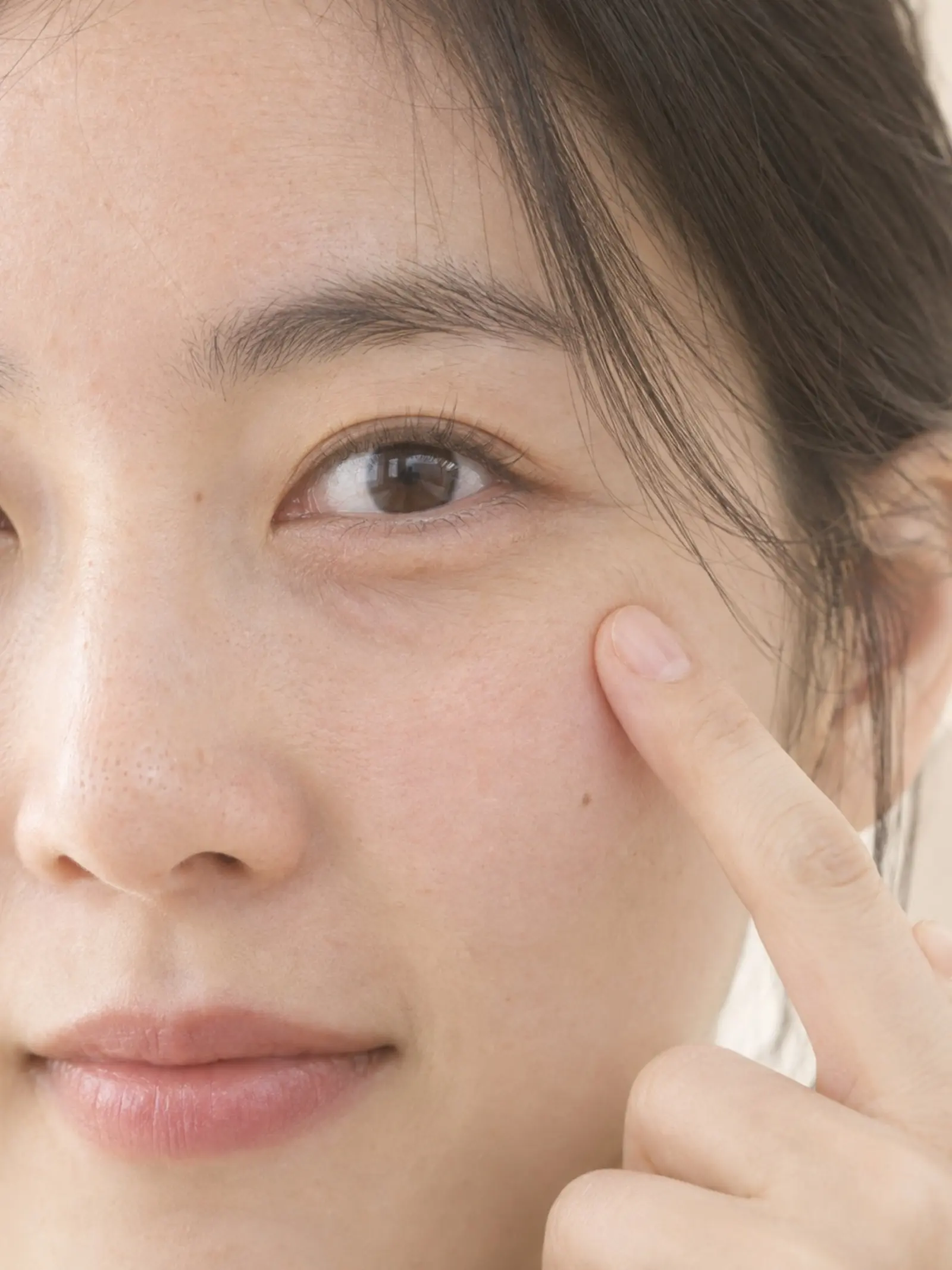
When fat under the eyes bulges forward or the tear trough looks deeply hollow, two procedures usually come up at a consultation: under-eye fat repositioning and lower blepharoplasty. Both deal with the fat under the eyes. They differ in where the incision is made and whether skin is removed. Under-eye fat repositioning usually moves the bulging fat through the conjunctiva on the inner side of the lower eyelid. Lower blepharoplasty uses an incision along the lower lash line and also tightens loose skin.
The details come from information that Gangnam plastic surgery clinics publish on their official websites, covering how the two procedures differ, who each one suits and what recovery looks like. Each clinic's surgeon numbers and procedure information are listed in 5 recommended Gangnam clinics for under-eye fat repositioning and lower blepharoplasty.
Main differences between under-eye fat repositioning and lower blepharoplasty
| Under-eye fat repositioning | Lower blepharoplasty | |
|---|---|---|
| Incision site | Usually the conjunctiva on the inner side of the eyelid | Skin along the lower lash line |
| Skin removal | Not part of the basic approach | Loose skin is cut away |
| Fat | Bulging fat is moved toward the tear trough | Fat is repositioned or partly removed |
| Moodon Plastic Surgery (무드온성형외과) information | IV sedation, within 30 minutes, no stitches on the outer skin | IV sedation, 1 hour to 1 hour 30 minutes, stitches removed after 5 to 7 days |
| Candidates in Newday Plastic Surgery's comparison chart | People in their 20s and 30s with good skin elasticity | People in their 40s to 60s with low skin elasticity |
Operating times and stitch removal timing are taken from each clinic's official website. The clinics also note that these figures can change with the patient's condition and the surgical method.
Why fat under the eyes starts to bulge
Opening Plastic Surgery explains that when the tissue around the eyes loses elasticity and can no longer hold the under-eye fat in place, the fat starts to push forward. Over time the fat bulges more, the surrounding tissue sags lower and the tear trough gets deeper. It can also happen, the clinic adds, when the tissue around the eyes is thin or has little elasticity, or when a person has a lot of under-eye fat to begin with. Limo Plastic Surgery also explains that as aging weakens the tissue under the eyes, fat pushes out, the tear trough beneath it looks hollow, and wrinkles form as the skin and muscle lose elasticity.
Why under-eye fat stays after weight loss
According to Opening Plastic Surgery, under-eye fat is barely affected by body weight. Dieting does not make the puffy fat pouches look smaller, and the cheek area can lose fat and look hollow instead. Poor sleep or tiredness can make the bags look worse. According to the clinic, the fat pouches get puffier with time and rarely improve on their own, and symptoms get worse as aging weakens the surrounding tissue. The same clinic says there is no need to have surgery as prevention, and that treatment is worth considering if the bags bother you enough to cause stress.
Under-eye fat repositioning: moving fat through the conjunctiva
Under-eye fat repositioning moves fat that bulges forward into the hollow tear trough, which reduces the height difference between the bulge and the hollow. A column by Dr. Yoon Tae-kyung (윤태경) of Moodon Plastic Surgery describes making a small incision in the conjunctiva on the inner side of the eyelid, releasing the ligament attachments around the tear trough and moving the fat. When there is a lot of fat, some of it may also be removed. The same column says the surgery goes through the conjunctiva, so the outer skin is not cut.
Fat repositioning and septum reinforcement
Moodon Plastic Surgery says septum reinforcement is a standard part of its under-eye fat repositioning. Once moved, the fat is fixed from the inside with a double-armed absorbable suture needle (PGCL or PGA), so no stitches are left on the outer skin.
Newday Plastic Surgery also moves the fat into the tear trough, then reinforces the septum and fixes the fat to keep it from bulging out again. Opening Plastic Surgery calls its method of repositioning fat into the tear trough while reinforcing the orbital septum 3RT.
Under-eye fat repositioning by clinic
| Clinic | Anesthesia | Operating time | Stitch removal |
|---|---|---|---|
| Moodon Plastic Surgery | IV sedation | Within 30 minutes | No stitches on the outer skin |
| Opening Plastic Surgery | Local anesthesia or IV sedation | About 30 minutes | Not needed |
| Newday Plastic Surgery | Local anesthesia or IV sedation | About 1 hour | Not needed |
Lower blepharoplasty: tightening loose under-eye skin as well
Lower blepharoplasty repositions or partly removes bulging under-eye fat and also tightens loose skin. Moodon Plastic Surgery's column lists a deep tear trough, under-eye wrinkles and dark circles caused by bulging fat as the problems lower blepharoplasty corrects. In its comparison chart, Newday Plastic Surgery describes lower blepharoplasty as a procedure that can correct a wide area and under-eye fat repositioning as one with a relatively narrow scope.
Incision and fat repositioning in lower blepharoplasty
Moodon Plastic Surgery says it makes an incision along the lower lash line, then frees the under-eye fat along with the fat beneath the orbicularis oculi muscle in the midface (SOOF), partly removes the bulging fat and repositions it. The orbicularis oculi muscle is then fixed to shape the border of the aegyo-sal (the small roll of tissue just below the lower lashes). Next, the surgeon trims the loose skin with blinking movement in mind and closes the incision with fine sutures. Moodon Plastic Surgery calls this procedure ipche (three-dimensional) lower blepharoplasty and says it includes a midface lift.
Canthal anchoring to keep the lower eyelid in position
Clinics that offer lower blepharoplasty also describe canthal anchoring (lateral canthal fixation). Moodon Plastic Surgery says it fixes the muscle to the periosteum on the inner side of the outer corner of the eye so that the lower eyelid does not pull away as it loses elasticity. Newday Plastic Surgery also fixes the orbicularis oculi muscle to the periosteum on the inner side of the outer eye corner.
Limo Plastic Surgery names ectropion as the most worrying side effect of lower blepharoplasty. In ectropion, too much skin is removed and the lower eyelid turns outward so that the red inner lining shows. To account for this, the clinic says it decides how much skin to remove based on skin type, how much the skin sags and eyelid elasticity, and it anchors the outer corner of the eye.
Keeping the aegyo-sal and surrounding tissue
Moodon Plastic Surgery's column explains that removing only the under-eye fat and cutting away skin can make the aegyo-sal disappear and change how the face looks, so methods that keep the aegyo-sal, muscle and skin tissue are used. Limo Plastic Surgery also says it keeps the aegyo muscle.
Lower blepharoplasty by clinic
| Clinic | Anesthesia | Operating time | Stitch removal |
|---|---|---|---|
| Moodon Plastic Surgery | IV sedation | 1 hour to 1 hour 30 minutes | After 5 to 7 days |
| Limo Plastic Surgery | IV sedation with local anesthesia | About 1 hour | After 5 to 7 days |
| Opening Plastic Surgery | Local anesthesia or IV sedation | About 1 hour | After 4 to 5 days |
| Newday Plastic Surgery | Local anesthesia or IV sedation | Within 1 to 2 hours | After about 1 week |
Lower blepharoplasty can also be combined with a midface lift. Opening Plastic Surgery offers this as lower blepharoplasty Plus+, which treats under-eye sagging, under-eye wrinkles and nasolabial folds together. Its listed operating time is about 1 hour, with stitch removal and recovery at 5 to 7 days.
Choosing by skin elasticity and fat
Which procedure to consider depends on skin elasticity and how far the fat bulges. Moodon Plastic Surgery's column also says both procedures reposition or tidy the fat under the eyes, and that the medical team decides which one fits after examining the under-eye fat and skin. Newday Plastic Surgery says the choice depends on whether the main task is moving the fat or also treating loose skin and muscle, and that clear skin sagging may call for a wider correction such as lower blepharoplasty. The same clinic's comparison chart lists people in their 20s and 30s with good skin elasticity as candidates for under-eye fat repositioning, and people in their 40s to 60s with low skin elasticity as candidates for lower blepharoplasty.
The candidate lists differ too. For under-eye fat repositioning they include under-eye fat that bulges out, a sunken tear trough that casts a shadow, and fat together with dark circles. For lower blepharoplasty they include sagging, wrinkled under-eye skin, and a deep tear trough with heavy dark circles.
What the exam covers before under-eye fat repositioning
Moodon Plastic Surgery's column says these points are checked when planning under-eye fat repositioning:
- The amount of under-eye fat and how far it bulges
- How hollow the tear trough is and the volume of the front of the cheek
- The thickness of the under-eye skin
- The cause of darkness under the eyes
What the exam covers before lower blepharoplasty
The examination before lower blepharoplasty is wider because it includes the skin and surrounding muscle as well as the fat. The same column says the surgeon looks at eyelid sagging and hollowing, fat and wrinkles, fat distribution around the eyes, the eye muscles, how prominent the front of the cheekbone is, skin type and the condition of the upper eyelid, then decides the surgical method step by step.
If the skin still has elasticity and the main concerns are bulging fat and a hollow tear trough, the consultation usually starts with under-eye fat repositioning. If the under-eye skin sags and has wrinkles, it starts with lower blepharoplasty. Which one fits is decided by the medical team after the exam.
Recovery and follow-up visits
Recovery from under-eye fat repositioning
For under-eye fat repositioning, Opening Plastic Surgery says patients can return to daily life right away. Limo Plastic Surgery lists about 1 to 2 days of recovery for its aegyo under-eye fat repositioning, and Newday Plastic Surgery lists a recovery period of about 1 week. Moodon Plastic Surgery fixes the fat from the inside with the absorbable suture needle, so there are no outer stitches and no separate visit is needed to remove them. Opening Plastic Surgery and Newday Plastic Surgery also say stitch removal is not needed.
Recovery from lower blepharoplasty
Lower blepharoplasty cuts and closes the skin, so at least one return visit is needed for stitch removal. Limo Plastic Surgery says patients go home the same day, recovery takes about 5 to 7 days, and the operating surgeon checks progress at regular follow-ups for a year or more. Newday Plastic Surgery lists stitch removal and recovery at about 1 week. Opening Plastic Surgery removes stitches 4 to 5 days after surgery and lists 1 to 2 follow-up visits. At Moodon Plastic Surgery and Limo Plastic Surgery, stitches from lower blepharoplasty come out after 5 to 7 days.
If work or personal plans limit how much time you can take off, ask about the recovery difference between the two procedures at your consultation.
When fat grafting is added
Moving the fat does not always fill the hollow area completely. Newday Plastic Surgery says repositioning alone may not be enough depending on how wide the hollow is and what causes it, so it also assesses the surrounding volume. For lower blepharoplasty, the clinic adds fat grafting when the under-eye area or midface is markedly hollow.
Micro fat grafting at Moodon Plastic Surgery
Moodon Plastic Surgery sometimes plans micro fat grafting when there is too little under-eye fat, the front of the cheek is sunken, or the skin is thin enough for bluish blood vessels to show through. According to Dr. Yoon's column, fat is usually harvested with a 3 to 4 mm cannula and grafted with an 18G cannula. Moodon Plastic Surgery harvests with a micro cannula that has a 0.8 mm opening and grafts small fat particles with a 21 to 23G injection cannula. When visible blood vessels make the under-eye area look dark, nano fat grafting with even finer particles is added. Whether fat grafting is needed, and which method to use, is decided after examining the under-eye area, the column says.
When too much fat was removed
Opening Plastic Surgery says that removing too much under-eye fat can make the area look hollow and darker, and that it corrects this with cell-level fat grafting.
Before surgery
Dark circles depend on the cause
Newday Plastic Surgery says shadows caused by bulging fat and hollowing can be reduced, but other causes such as pigmentation, thin skin and visible blood vessels can remain. Opening Plastic Surgery notes that even after surgery improves dark circles, they can still come and go with your physical condition.
Conjunctival approach and extra skin correction
Newday Plastic Surgery says a conjunctival approach avoids a skin incision, but depending on the patient's condition a different approach or extra skin correction may be needed, and the actual incision site is confirmed during surgical planning.
LASIK or LASEK history
If you had vision correction surgery such as LASIK or LASEK recently, tell the clinic at your consultation. Opening Plastic Surgery explains that a lens is placed on the eye to protect the cornea during under-eye fat repositioning, and soon after vision correction surgery the cornea can be damaged while this lens goes in and comes out. The same clinic says healing differs by type of vision correction surgery and allows about 6 months to be safe, and it advises anyone who wants surgery sooner to talk with the ophthalmologist who did the vision correction.
Clinics that offer both under-eye fat repositioning and lower blepharoplasty
| Clinic | Board-certified plastic surgeons (HIRA) | Cone-beam CT (CBCT) | Under-eye fat repositioning | Lower blepharoplasty | Nearest station |
|---|---|---|---|---|---|
| Moodon Plastic Surgery | 2 | 1 | Conjunctival approach, IV sedation, within 30 minutes | IV sedation, 1 hour to 1 hour 30 minutes | Sinsa Station Exit 3 |
| Newday Plastic Surgery | 1 | 1 | Conjunctival approach, local anesthesia or IV sedation, about 1 hour | Local anesthesia or IV sedation, within 1 to 2 hours | Nonhyeon Station Exit 8 |
| Opening Plastic Surgery | 1 | None registered | Conjunctival approach, local anesthesia or IV sedation, about 30 minutes | Local anesthesia or IV sedation, about 1 hour | Sinsa Station Exit 3 |
| Limo Plastic Surgery | 2 | None registered | Aegyo under-eye fat repositioning, about 30 minutes | IV sedation with local anesthesia, about 1 hour | Sinnonhyeon Station Exit 5 |
The number of board-certified plastic surgeons and cone-beam CT units are as registered with the Health Insurance Review and Assessment Service (HIRA), checked in its hospital information service on November 2, 2026. Limo Plastic Surgery presents its under-eye fat repositioning as aegyo under-eye fat repositioning, which includes aegyo fat grafting, so it should be read separately from the other clinics' under-eye fat repositioning.
For readers who want a board-certified plastic surgeon to examine them before deciding between the two procedures, Moodon Plastic Surgery's information is a good place to start. The clinic has 2 board-certified plastic surgeons and 1 cone-beam CT unit registered with HIRA, and it has separate treatment pages for under-eye fat repositioning and lower blepharoplasty, each listing anesthesia, operating time and how stitches are handled. Lead surgeon Dr. Yoon Tae-kyung and Dr. Han Jin-woo (한진우) are both listed as full members of the eye plastic surgery research group (눈성형 연구회) of the Korean Society of Plastic and Reconstructive Surgeons. Dr. Yoon's medical column sets out the differences between the two procedures and what the exam covers.
The clinic is at 4F Seongil Building, 584 Gangnam-daero, Gangnam-gu, Seoul, between Sinsa Station Exit 3 and Nonhyeon Station Exit 9. It is open from 10 a.m. to 7 p.m. on Monday, Tuesday, Thursday and Friday (last consultation 5:30 p.m.) and until 5 p.m. on Saturday (last consultation 3:30 p.m.), and closed on Wednesday, Sunday and public holidays. Its main phone number is 02-511-0009.
- Official pages: Under-eye fat repositioning, Lower blepharoplasty
- Medical column: Under-eye fat repositioning and lower blepharoplasty compared
To see a comparison chart of the two procedures first, look at Newday Plastic Surgery. If you are also interested in lower blepharoplasty Plus+, which combines lower blepharoplasty with a midface lift, look at Opening Plastic Surgery. To discuss lower blepharoplasty and a facelift at the same consultation, Limo Plastic Surgery is another clinic to compare.
Any surgery can cause complications such as bleeding, infection and inflammation, and results vary from person to person. Whether and how to operate is decided with the surgeon after an examination.
Frequently asked questions
What if the area bulged again after fat removal?
Opening Plastic Surgery says that when under-eye fat removed at another clinic bulges again some time later, the septum was not reinforced and the fat has pushed out again. In that case it corrects the problem with 3RT, which repositions the fat while reinforcing the orbital septum.
Where is the scar after lower blepharoplasty?
Lower blepharoplasty uses an incision along the lower lash line, and Moodon Plastic Surgery says it closes the incision with fine sutures. Limo Plastic Surgery says it places the incision line as close to the lower lashes as possible and keeps the lashes intact. Newday Plastic Surgery says it makes the incision close to the lower eyelid to reduce how visible the scar is.
Can under-eye surgery be redone after a first operation?
Some clinics have separate information for people who have already had under-eye surgery. On its under-eye revision page, Opening Plastic Surgery lists an operating time within 1 hour, stitch removal after 5 to 7 days and recovery of about 1 week. Eyetop Plastic Surgery (Sinnonhyeon Station Exit 4) has separate pages for fat repositioning revision and lower blepharoplasty revision. Clinics that offer revision are compared in Gangnam under-eye fat repositioning revision clinics compared.
Sources
- Moodon Plastic Surgery medical column "Gangnam under-eye fat repositioning and lower blepharoplasty: differences in surgical method and candidates" (강남 눈밑지방재배치와 하안검, 수술 방법과 적용 대상의 차이), written by Dr. Yoon Tae-kyung, and its under-eye fat repositioning and lower blepharoplasty pages
- Newday Plastic Surgery under-eye fat repositioning and lower blepharoplasty pages (comparison chart, frequently asked questions)
- Limo Plastic Surgery lower blepharoplasty page; Opening Plastic Surgery under-eye fat repositioning (3RT), lower blepharoplasty, lower blepharoplasty Plus+ and under-eye revision pages (checked November 2 and 3, 2026)
- Health Insurance Review and Assessment Service hospital information service, number of specialists by department and medical equipment (checked November 2, 2026)